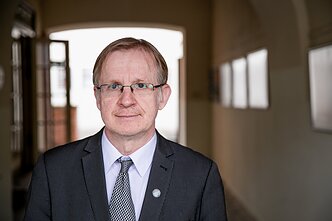
Ben Reis interviews historian Arūnas Bubnys about the German occupation of Lithuania during World War Two.
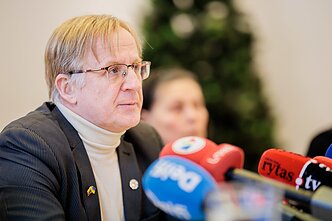
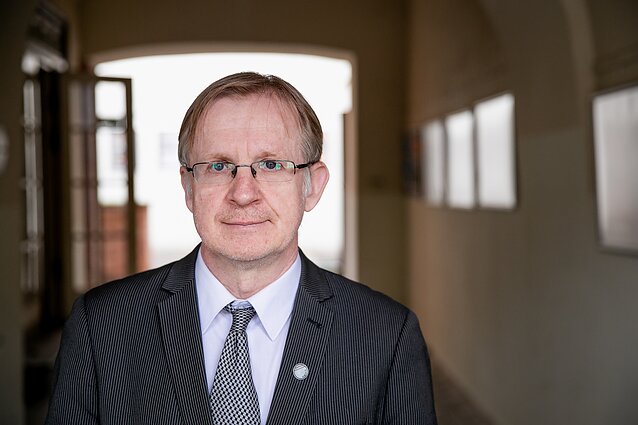
Dr Bubnys is the general director of the Genocide and Resistance Research Centre of Lithuania and an expert on the history of World War Two and the Holocaust. His books include „The Polish Underground in Lithuania 1939–1940, The Lithuanian Anti-Nazi Resistance 1941-1944, and The German Occupation of Lithuania (1941–1944). He is also a member of the International Commission for the Evaluation of the Crimes of the Nazi and Soviet Occupation Regimes in Lithuania.
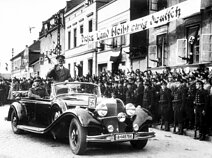
If we talk about the German occupation of Lithuania, we could start with the occupation of the Klaipėda region (or Memelland, as it was called in German) in 1939. How did this happen?
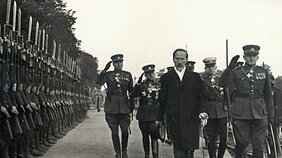
Between the two World Wars, Lithuania faced serious problems regarding its foreign policy. Especially with Poland, for Poland occupied and annexed the Vilnius region with Lithuania’s historical capital in 1920. This was the main problem.
Relations with Germany were not very good either, especially after Hitler came to power in 1933. And the Memel-Klaipėda question became more urgent every year, while the relations between Germany and Lithuania deteriorated. Back then, until World War Two, Lithuania had its best relations with Latvia and – surprisingly – the Soviet Union.
When Hitler began to implement his revanchist policy, he wanted to take back territories which Germany had lost in World War One. When the Lithuanian foreign minister was in Western Europe and Germany, German Foreign Minister Ribbentrop told him that Lithuania had to give the Klaipėda region. Otherwise, the German army would advance further into Lithuania, maybe even to Kaunas. The Lithuanian government was forced to sign a treaty with Germany, ratifying the transfer of Klaipėda.
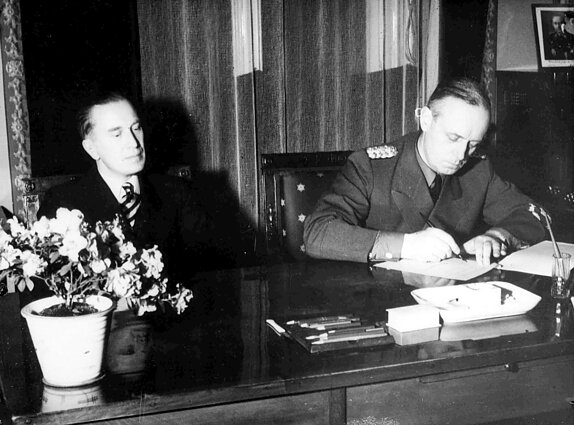
This was a second big ultimatum for Lithuania. The first one was in 1938 when Poland demanded the establishment of diplomatic relations between the two countries. Because of the disputed Vilnius region, there had been no diplomatic relations between Lithuania and Poland.
The Molotov-Ribbentrop pact between Germany and the Soviet Union on August 22, 1939, opened the way to the third ultimatum. This treaty of non-aggression included a secret protocol, in which Germany and the Soviet Union divided Eastern Europe into their spheres of influence. One year later, Lithuania was occupied and annexed by the Soviet Union.
How did the population react to this? The Klaipėda region was occupied by Germany and Vilnius given back to Lithuania – but within the Soviet Union.
The population was afraid and suppressed, for the small country of Lithuania could not defend itself against great foreign powers. All people were afraid of what could happen next.
The Soviet ultimatum and the following occupation were unexpected, because the Soviet Union had been perceived as friendly by the Lithuanian government for 20 years. But already after the “treaty of friendship” in October 1939 between Lithuania and the Soviet Union, the small country was forced to accept a Soviet garrison of 20.000 soldiers. This was almost as much as the whole Lithuanian army. After this treaty, Lithuania partially lost its independence and was perceived as a Soviet protectorate. The country lost the ability to pursue its own foreign policy.
The Soviet occupation and incorporation must have been a shock to many Lithuanians. Politicians were the most affected group. In July 1940, President Antanas Smetona gave this description of his prime minister, which could also be applied to other Lithuanian politicians: “He was like someone waiting for someone else to do what he himself should do. He hesitated, wavered.”

And the next bad surprise was the German invasion of the Soviet Union on June 22, 1941, right?
After the Soviet occupation of Lithuania, Sovietization in the political, economic, and cultural life started. There were massive repressions conducted by the Soviet occupation forces, especially the great deportations on June 14, 1941. In just two days, approximately 17,000 Lithuanians were deported to Siberia.
Because of that, much of the population developed resentment against the Soviet Union. Most ethnic Lithuanians waited for the German-Soviet war and thought that Germany would free them from the Soviet yoke and, with German help, Lithuania would regain independence.
The situation of the Jewish population of Lithuania was different. They understood that a Nazi occupation would be very bad for them. So there were many conflicting attitudes in Lithuania, between ethnic Lithuanians and Russians, between Lithuanians and Jews. The population was not united, opinions were very different.
But most of them were Lithuanians, and with the German invasion there came a Lithuanian Anti-Soviet uprising.
Yes, patriotic-nationalistic Lithuanians organised illegal activities against the Soviets. They thought they could reestablish Lithuanian independence with the German help. There was the Lithuanian Activist Front and other organisations.
When did the Lithuanians recognise that the Germans were no liberators?
Not very soon, I think. But Germany did not recognise the provisional government and dissolved it in August 1941. After that, a civil administration was introduced. By late summer or autumn, most of Lithuanian politicians and politically aware people recognised that Germany was no liberator and that Lithuania would get its independence under Germany.
They set up a special administration controlled by Germany. How did that work in practice?
Cooperation between the German civil administration and the so-called Lithuanian administration worked as normal until the spring of 1943. There were no big incidents or confrontations.
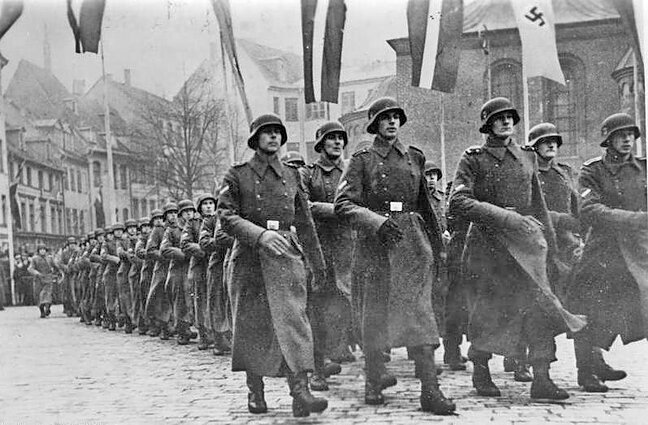
However, after Lithuanians boycotted a call to form a Lithuanian SS-Legion and the Germans were not able to set it up, conflicts between the civil administration and the Lithuanians erupted. Conflicts between the administration and the population became fiercer, it was not the same situation as in 1941 and 1942.
Were there any anti-German resistance movements?
There was a national resistance movement, but it was peaceful. Organisations held an illegal press and conducted several boycotts and sabotage actions. If they thought that something was not in the Lithuanian interest – such as work or military mobilizations – they boycotted the measure.
But there were two more resistance movements – the Soviet red partisans and the Polish Armia Krajowa – that offered armed resistance and had their own partisan units. All in all, there were three different resistance movements. Each one pursued their own political interests, generally very different ones. They could not work together and considered each other enemies. Relations between the Lithuanians and the Poles were bad, as was that between the Lithuanians and the Soviets. Sometimes they even fought each other – there were fights between Polish and Soviet partisans.
The Germans tended to retaliate very brutally against any partisan activities, for example, by shooting civilians. Were there any consequences for passive resistance?
Yes, especially after the boycott of the Lithuanian SS legion. From April until May 1944, the German Gestapo imprisoned the leaderships of many Lithuanian organisations and sent them to camps.
Moreover, the Holocaust was committed against the great Jewish minority of Lithuania. Did it start immediately with the presence of German troops?
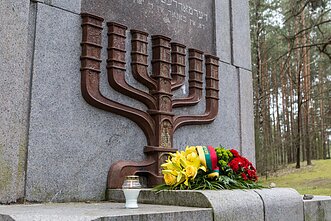
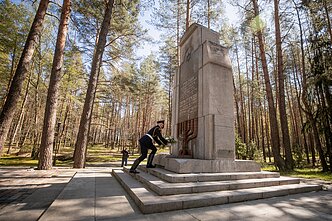
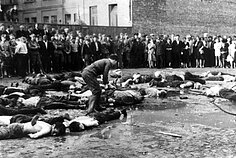
Yes, the Holocaust in Lithuania started very early. The first big pogroms occurred during the first week in Kaunas. After the German occupation, SS Einsatzgruppen organised mass shootings of Jews, other nationalities, and communists.
This was done very quickly, radically, and effectively. Over several months in the summer and autumn of 1941, approximately 80 percent of Lithuanian Jews were murdered. Several divisions of the Lithuanian police also took part in that.
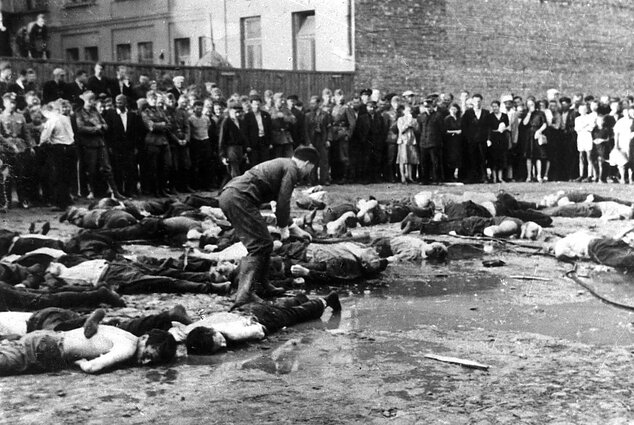
Only 3 to 5 percent of Jews in the countryside survived or were saved by locals. For example, the few survivors of the Seventh Fort in Kaunas. Some managed to escape by bribing guards. The famous attorney Yakov Goldberg successfully requested the release of around 30 Jews who had participated in the 1918–1920 fight for Lithuanian independence from the Seventh Fort. In addition to that, Jewish women from the fort were liberated on July 7, 1941.
How many Jews were that in total?
Before the German-Soviet war, approximately 208,000 Jews lived in Lithuania. Several thousand fled to the Soviet Union when the war started. In 1941, approximately 150,000 Jews were murdered. Small shtetls in the countryside were annihilated. Only three big Ghettos remained – in Vilnius, Kaunas, and Šiauliai.
Approximately 40,000 or 50,000 Jews stayed alive for the time being. They were put into ghettos and had to work for the civil administration and the Wehrmacht. The Vilnius ghetto was liquidated in September 1943, the ghettos in Kaunas and Šiauliai were liquidated in July 1944 during the end of German occupation. The women were deported to a concentration camp near Danzig, the men to Dachau.
Not only Jews, but also Soviet prisoners of war were a big victim group. During the German occupation, 170,000–190,000 Soviet prisoners of war were murdered in Lithuania. Most of them were not shot but died because of bad conditions in the prisoner camps. A third but smaller group consisted of members of the Polish, Soviet, and Lithuanian resistance movements.

Locals also participated in the pogroms. Were they forced by the Germans or did some participate voluntarily?
As I said, there were only pogroms in the beginning. After that, the systemic process of murder started. Several units of the Lithuanian police attended. For example, there were 28 Lithuanian police battalions formed. Ten of them participated in the Holocaust. Two battalions, which were formed in Kaunas, systematically participated in the murder of Jews. Most of them took place in 1941.
The Lithuanian public order police and the so-called partisans, also known as auxiliary police, participated in mass shootings in provinces and municipalities in 1941. There were different motivations but the police and other battalions were military units, they had to follow orders. […] Disregarding orders could lead to negative consequences and personal risk was high. Few policemen evaded this.
It was different in the case of the auxiliary police. They had more freedom and could avoid murders. Of course, there were also ideologues, Jews were perceived as communists. Anti-Jewish propaganda was very influential. Jews were defamed as enemies of Lithuania and servants of the Soviet repressive structure. In villages, there were also material interests in Jewish property.
The Genocide and Resistance Centre of Lithuania published many works about the German occupation crimes. I give an overview about this in my publication “The Holocaust in Lithuania between 1941 and 1944” from 2019. […]
Today, the remaining community of Lithuanian Jews, or Litvaks, is an important voice in Lithuanian debates regarding the Holocaust. The murder of Jews is frequently mentioned in Lithuanian education programmes. Until today, the Lithuanian state pays reparations to Holocaust survivors and their heirs. In 2022, the Lithuanian parliament passed a law to pay restitutions of 38 million dollars.
[Editor’s note: under the 2011 Law on Goodwill Compensation for Real Estate of Jewish Religious Communities, the Lithuanian government was paying out a symbolic compensation for nationalised Jewish communal property, around 37 million euros, in yearly instalments until 2023. These were not individual reparations, the money was to be used for communal religious, educational, cultural, etc projects. A new law was passed in 2022, offering another symbolic sum of 37 million euros as compensation for nationalised Jewish private property. Under the terms of the law, up to 10 million euros can be distributed to owners of lost property and their heirs, the rest will be used for communal projects of the Lithuanian Jewish community.]

Were there any differences between the German occupation of Lithuania and the cases of Latvia and Estonia?
The Lithuanian and Latvian situations were very similar. Of course, there were differences: the Lithuanians could form their provisional government during the anti-Soviet uprising. There were also anti-Soviet partisan fights in Latvia and Estonia, but not as intense as in Lithuania.
In Latvia and Estonia, there were national resistance movements as well. Contrary to the other Baltic nations, the Lithuanians did not form any SS legions. Latvians set up two Waffen-SS divisions, Estonians one.
Generally, there were more similarities than differences between the Baltic countries. In comparison to Belarus and Ukraine, the German occupation of Lithuania was less cruel to the native population. Of course, except the Jewish population, for Germans wanted to eradicate them in all occupied countries.
Was it so because the Baltic peoples were no Slavs?
Yes, I think that Lithuanians, Latvians, and especially Estonians were considered more valuable by German race ideology than Russians, Ukrainians, and Belarusians.
Germans even conducted some studies about the racial status of the Baltic peoples. How did this happen?
They formed commissions that conducted several studies. On that basis, they concluded that Estonians could be a very Germanised people, 70-75 percent could be Germanised. In case of Latvians, 50 percent, and Lithuanians, one third.
It is hard to say how these studies were set up in practice. There were not only physical examinations, but also studies of character traits. Relations to Jews and Slavs were also a subject they studied. These studies were not as primitive as they sound, they were highly complex. Probably, even the scientists themselves believed in them.
What were German long-term plans for Lithuania?
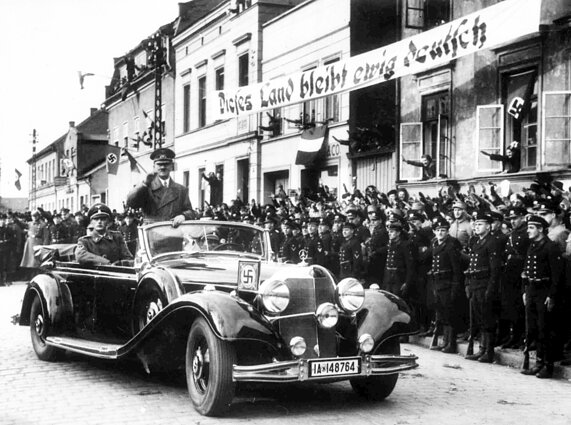
According to long-term plans for the time after the Endsieg, the appropriate third of ethnic Lithuanians should be Germanised. The rest should be resettled to the Soviet Union to administer the Russian and Belarusian territories. One part should be exterminated, just like the Jewish population. Lithuania should be colonised, Germanised, and annexed as a new territory of the Reich. Lithuania was supposed to become part of East Prussia.
But luckily, this did not work according to plan…
A German victory would have been worse for Lithuanians than the Soviet occupation, for the Soviets less systematically implemented their policy. The Germans, on the other hand, were very systematic and methodical and would have conducted their colonisation and Germanising policies more effectively, like in East and West Prussia. The fate of the Lithuanians would have been a similar one.
After the battles of Stalingrad and Kursk in 1943, it became clear that Germany could not win the war and that the Soviets would return to Lithuania. How did the Germans react to this? Did they attempt one last mobilization in Lithuania or did they use scorched-earth tactics?
Germans wanted to send more Lithuanians for fatigue duty to Germany or to mobilise them for the Wehrmacht. However, the results were not very good. Of course, some 60,000 Lithuanians were taken to Germany for forced labour, approximately 15,000 were conscripted into several military units. But in comparison to Latvia and Estonia, these numbers are not very high.
Lithuanians were aware that the Soviets would come back. Institutions were preparing during the end of the German occupation for an anti-Soviet partisan war. This war began when the Soviets returned and occupied Lithuania once again. It lasted until 1953 and claimed many victims. The Lithuanian and Ukrainian partisan wars were the largest against communist governments in Europe.
Lithuanians decided on a partisan war because an open fight against the Soviets was hopeless?
It was thought that the USA and Great Britain would start a war against the Soviets after the defeat of Germany. Because of that, many thought a partisan war as a chance to survive and to regain Lithuania’s statehood. In the beginning of the war, there were such illusions among Lithuanian partisans.
Germans fought battles against the Soviets over cities like Vilnius. What destruction did they cause?
There was very heavy fighting in Vilnius which lasted for a week. The city was declared a German fortress. Other cities like Kaunas were taken by the Soviets without a fight. The heaviest battles took place in Vilnius and Klaipėda. There were also some fighting in the region of Šiauliai.
How did the German army behave on the retreat?
The scorched-earth tactics like in Belarus were not used in Lithuania. Especially in the west, people were evacuated to East Prussia. Factories and companies were not destroyed on the same scale as in Russia or Belarus.
Speaking of Klaipėda – Germans and Lithuanians lived there side-by-side. Who was evacuated – only Germans or also Lithuanians?
The Lithuanians were evacuated as well. Most of Klaipėda’s population was German. Almost the whole population was evacuated to East Prussia. After the Soviets captured Klaipėda in January 1945, maybe 17 inhabitants were registered in the city. Before the war, the had been 120,000-130,000 people. The population either fled or was evacuated. And there were reasons for that. Advancing to Klaipėda and Prussia, the Soviets deported Germans, raped women, and committed all other crimes against locals.

So cities like Memel or Vilnius were basically depopulated?
Not Vilnius, except for the Jewish population, of course. They were deported to other concentration camps, for example in Estonia. When the Soviets captured Estonia, the Jews were deported to the region of Danzig, the men even further, to Dachau.
How did the Soviets manage the immediate reconstruction of Lithuania? How was Klaipėda repopulated again?
Most of Klaipėda was colonised by Lithuanians from other regions, but there also were many newcomers from Russia and Belarus. The city became half-Lithuanian, half-Russian. The population structure changed radically.
What about Vilnius?
Until World War Two, the Polish and Jewish populations dominated Vilnius. After the war, the Jews had been exterminated. Most of the Poles were “repatriated” in 1945 or 1946. Just like Klaipėda, the city was colonised by Lithuanians, Russians, and Belarusians, but also partially by Poles from the Vilnius region.
What happened to Lithuanian politicians who fought for the country’s independence?
Most of them fled to the West, first to Germany. They were partially imprisoned by the Gestapo. After Germany lost the war, most of them emigrated to the USA, South America, or other countries. The ones who stayed in Lithuania were imprisoned and/or shot by the Soviets. Political activists were repressed.
No Lithuanian government in exile was set up. Many Lithuanian politicians fled the country but they did not set up a government. There were several organisations but they could not agree on a unified government like Poles, Czechoslovaks, or others.
How do Lithuanians feel about the presence of German troops nowadays? Do they appreciate the protection?
I think that 90 percent are glad about it. Especially ethnic Lithuanians understand that support from big countries like Germany is important for a small country. We feel much safer having NATO troops in Lithuania. We do not see this as a new occupation but as a measure of defence. I think that Lithuanians are pro-German nowadays.
So one could call this reconciliation?
Yes. I am a fan of German football clubs myself and have relations with German history.
What should Germans know about Lithuania?
It is a small country which has good relations with Western Europe and Germany. We love German football and German beer. Of course, we have a common history, for we were neighbours for 700 in East Prussia and the Klaipėda region.
Ben Reis is a student of Eastern European History and Historical Journalism at Justus-Liebig-Universität Gießen in Germany. The interview was shared with LRT by the Genocide and Resistance Research Centre of Lithuania.

Newsletter
Every Friday morning.